Start with the cooking method
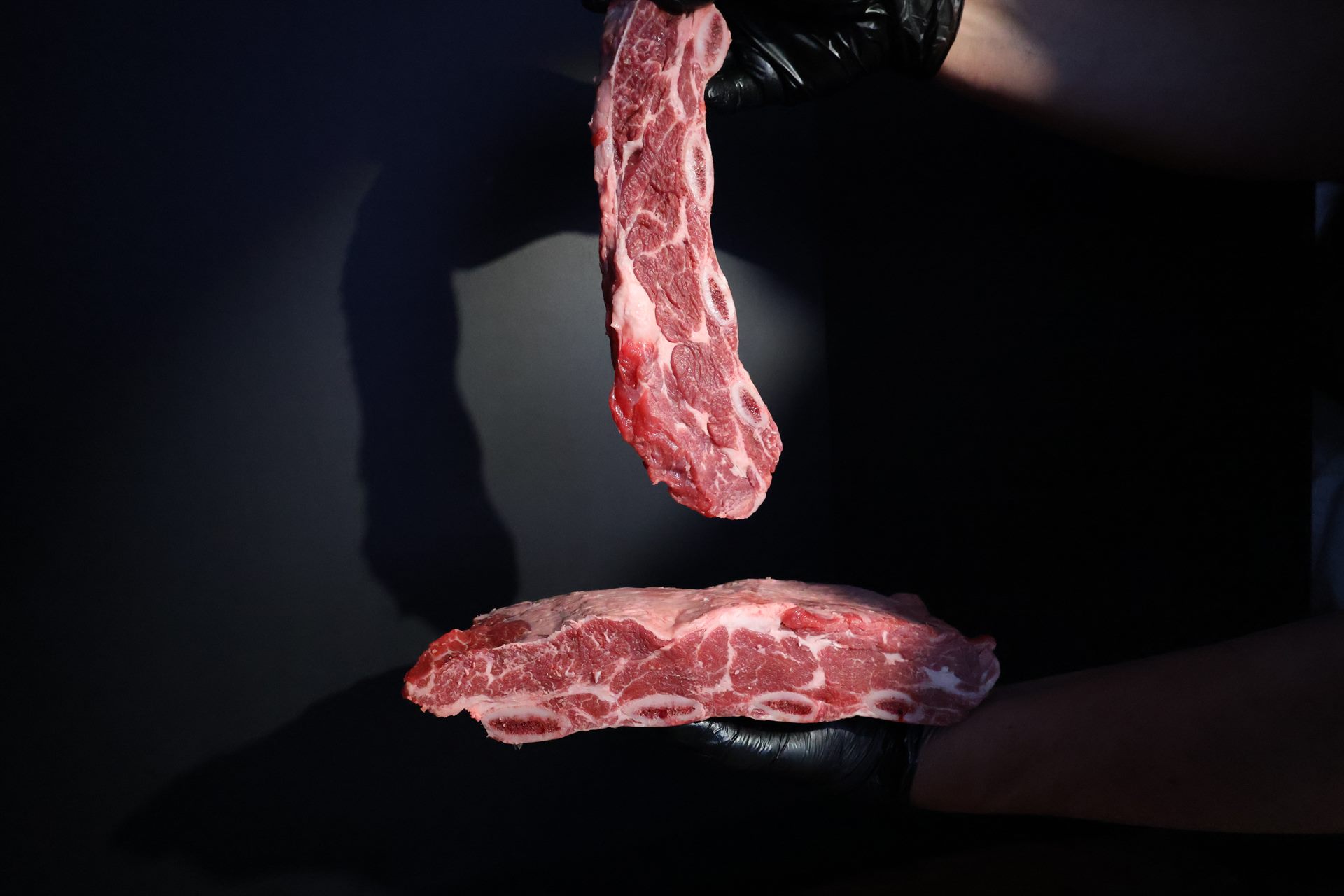
Tell the butcher whether you plan to grill, roast, braise, or cook quickly in a pan. The right cut depends on heat, time and how much connective tissue you want to break down. A fast, hot sear suits tender cuts like striploin; a long, low cook rewards short ribs and shoulder. When you lead with the method, the counter can point you to two or three options instead of guessing.
Read the meat, not the marketing
Fresh beef looks bright to deep red and firms up when pressed. The surface should be moist but not sticky or dry at the edges. Fat should smell clean and neutral. Poultry should be pale and odorless. A tidy case, cold to the touch, and staff who can answer questions directly tell you more than any dramatic claim on a sign.
Match the cut to the number of people
As a rough starting point, plan for roughly half a pound of boneless meat per adult for a normal meal, and more for a barbecue where meat is the main event. Bone-in cuts weigh more for the same yield. If you are cooking for a crowd, it is easier to combine a quick-cooking cut with one that can rest and hold.
Confirm availability before a special trip
Fresh selection changes with each delivery. If your recipe depends on a specific cut, a certain thickness, or a larger quantity, contact the Plymouth counter first. Ground-on-demand hamburger is made while you shop, and custom orders are easier when the team knows the date.